The ABA Worker's Union

Alex Profile Picture

Alex

@ABA.Rocks

The field of Applied Behavior Analysis (ABA) is expanding rapidly, driven by rising diagnoses, insurance coverage mandates, and growing demand for services. Industry data show that therapy appointments are projected to grow significantly, alongside steady increases in revenue, service hours, and insurance payments (CentralReach, 2025). From a distance, this growth looks like progress. Up close, it looks like burnout. The system is expanding faster than the workforce can keep up with, and the burden is falling on the lowest-paid workers in the field: the Registered/Behavior Technician (R/BT). 


For the purposes of this article, entry-level workers in ABA will be referred to as "R/BTs," though it is important to note that RBTs are certified (must pass an exam, maintain supervision, and periodic competency checks).


Persistent staffing shortages remain one of the defining features of the ABA industry despite the rapid increase in certified professionals. Overwork and exposure to a variety of seasonal illnesses lead to chronic illness and fatigue, increasing call-outs. The work is stressful, physically and emotionally. Researchers have documented that demand for behavior analysts and technicians continues to outpace supply, leaving families on waitlists and organizations struggling to retain staff (Nastasi et al., 2024). Client cancellations often mean R/BTs don't get paid, which means they'll need to work additional jobs or quit out of financial frustration. Put simply, the shortage is not simply a pipeline problem: it's a retention problem. 


When R/BTs turnover, BCBAs need to adapt the treatment plan for new technicians as they work to rebuild trust and rapport with the family. This can lead to service interruptions, "pauses," and even skill/behavior regression for children, and tremendous frustration for families, who endured a long wait list only to have a rapid turnstile of workers serving their child. There is no data on the effect that this may have on the young children who meet, grow to trust, and then eventually lose their R/BT over and over again. It would be easy to hypothesize that this type of cyclical abandonment is harmful at best, traumatic at worst. 


The data are clear: Workers are leaving the field because conditions make long-term employment difficult, if not impossible, to sustain.


High turnover has become normalized across the industry, yet the underlying causes are remarkably consistent nationwide and from company to company. Studies examining burnout among Behavior Technicians (BTs) and Registered Behavior Technicians (RBTs) have identified recurring themes, including difficult working conditions, dissatisfaction with pay and benefits, inconsistent supervision, and career stability (Nastasi et al., 2024). These findings align with industry reports indicating that employee turnover remains a persistent challenge for providers and directly affects the continuity and quality of care delivered to clients (CentralReach, 2025). Turnover is often treated as an unfortunate but inevitable feature of the field. The research suggests otherwise: It is a predictable response to working conditions.


The Problem We Saw Coming

More than a decade ago, researchers were already warning that the structure of the ABA workforce could create exactly the problems we are now experiencing. In a widely cited 2016 analysis of the newly created Registered Behavior Technician (RBT) credential, scholars raised concerns that the rapid expansion of entry-level staff with limited training requirements could lead to reduced service quality, workforce instability, and increased commercialization of the field if not carefully managed (Leaf et al., 2016)  . The authors specifically cautioned that the minimum training standards for technicians appeared inconsistent with the level of skill required to deliver high-quality intervention and warned that economic pressures would likely encourage organizations to rely on the least expensive labor available. They also noted that the growth of certification systems, combined with rising demand for services, could accelerate the commercialization of ABA and create incentives that prioritize expansion over workforce development. In retrospect, these warnings read less like speculation and more like early diagnosis. The high turnover, inconsistent training, injury rates, and workforce shortages documented across the field today are not unexpected outcomes. They are the predictable consequences of structural decisions identified years ago, long before the current crisis became what it is.


Safety concerns further illustrate the structural nature of the problem. Surveys of behavior technicians working with severe problem behavior reveal that workplace injury. In one national study, 75 percent of technicians reported sustaining a work-related injury while performing their job, and more than one-third reported that their client also experienced an injury during service delivery (Ralston & Brown, 2023). Injury types range from minor cuts and scrapes, to concussions, fractures, and severe bites. These findings reflect the physical demands of the work and the reality that technicians are frequently assigned to challenging cases without adequate preparation or ongoing support. Working in the community poses its own risks: a behavior technician, Charles Kinsey, was shot by police while attempting to help his client, a young man with autism, get out of the road. According to news reports, before he was shot, Charles was heard saying:

"All he has is a toy truck. A toy truck. I am a behavior therapist at a group home"


Female RBTs experience sexual harassment from caregivers. Black and queer RBTs are "taken off cases" when a family feels "uncomfortable." In the name of expanding access to services, employers in the ABA space are putting workers through emotional and physical trauma on a daily basis.


Training and supervision practices remain inconsistent across organizations, contributing to both safety risks and burnout. Research indicates that some technicians enter high-risk situations with minimal preparation: 13 percent report no initial training and 29 percent report no ongoing training while working with clients who exhibit severe problem behavior (Ralston & Brown, 2023). At the same time, as highlighted by Leaf et al. (2016), the formal requirements for entry into the RBT role remain relatively limited. The credential requires a high school diploma, a background check, and completion of a 40-hour training program prior to certification (Leaf et al., 2017). While supervision by BCBAs is intended to supplement this initial preparation, the quality and availability of that supervision vary widely across providers. There is a national shortage of BCBAs, with the BACB reporting 81,566 currently certified, while some industry analysts estimate demand for 132,307, growing 10-30% year-over-year.


These workforce problems are not occurring in isolation. They are unfolding alongside a rapid transformation in the industry's ownership structure. Over the past decade, private equity firms have moved aggressively into autism services, attracted by reliable insurance reimbursement and growing demand. Between 2017 and 2022, private equity firms completed approximately 85 percent of all mergers and acquisitions in autism services, making the sector one of the most heavily consolidated areas of healthcare (Batt et al., 2023).


Most of these investments did not involve building new clinics or expanding services. Instead, they involved purchasing existing providers and restructuring them to generate rapid financial returns. In some cases, companies were burdened with substantial debt after acquisition, creating pressure to reduce staffing, cut training, and increase billable hours (Batt et al., 2023). Researchers and clinicians have warned that these financial strategies can undermine both job quality and patient care by prioritizing profitability over stability (Batt et al., 2023).


The collapse of major provider networks has illustrated the risks of this model. After a private equity acquisition, one of the largest autism service providers in the United States closed more than 100 sites and ultimately filed for bankruptcy, leaving workers unemployed and families scrambling to maintain services (Batt et al., 2023). The first RBTs who organized a union in Oregon attempted to push back. Oscar Lemus-Arellano and Mica Rudich organized their coworkers to improve their working conditions, fighting for better pay and more frequent breaks. The AFT quoted Oscar, who had worked at CARD for 2 years, as saying:

“The turnover rate interfered with the mission. People would come in, stay for a few months, and leave. But the longer you work with a child, the better the therapy you provide because you build a better rapport.”


After the vote, the company closed down operations in the entire state. Events like this are not just business failures. They are workforce shocks that ripple outward through entire communities.


The structure of the workforce itself reinforces instability. The RBT role is often framed as an entry-level position rather than a sustainable profession, leading many workers to view the job as temporary. Researchers have described the position as a transient or poorly defined career path, contributing to ongoing workforce turnover and dissatisfaction (Nastasi et al., 2024)  . This instability affects not only workers but also the children and families who rely on consistent therapeutic relationships. Frequent staff turnover disrupts treatment progress, increases workload for remaining staff, and undermines organizational stability.


Workers themselves have been clear about what would improve retention and job satisfaction. Studies consistently identify competitive pay, reliable benefits, consistent supervision, and opportunities for professional development as key factors influencing whether technicians remain in the field (Nastasi et al., 2024)  . These recommendations are neither radical nor unrealistic. They reflect standard employment practices in most healthcare professions. Their absence in many ABA settings highlights the structural nature of workforce instability.


Burnout in the ABA workforce is often framed as an individual issue requiring resilience or stress management. However, the research literature defines burnout as a response to environmental stressors in the workplace rather than a personal deficiency (Nastasi et al., 2024). Low wages, unpredictable schedules, high caseloads, and insufficient training create conditions that increase the likelihood of burnout, regardless of individual motivation or dedication. RBTs are not failing at their jobs - their jobs are failing at being a reasonable way to make a living, and providing a sustainable method for young children to get the support they need.


The rapid growth of the ABA industry has created a paradox. Demand for services continues to increase, yet the workforce responsible for delivering those services remains unstable. Organizations expand operations, open new clinics, and serve more clients each year, while the underlying labor conditions remain largely unchanged. Financial investment has accelerated this expansion, but it has not solved the fundamental workforce problem. In many cases, it has intensified it, with quarterly KPIs replacing compassion, and the field's reputation is increasingly damaged by these malignant practices.


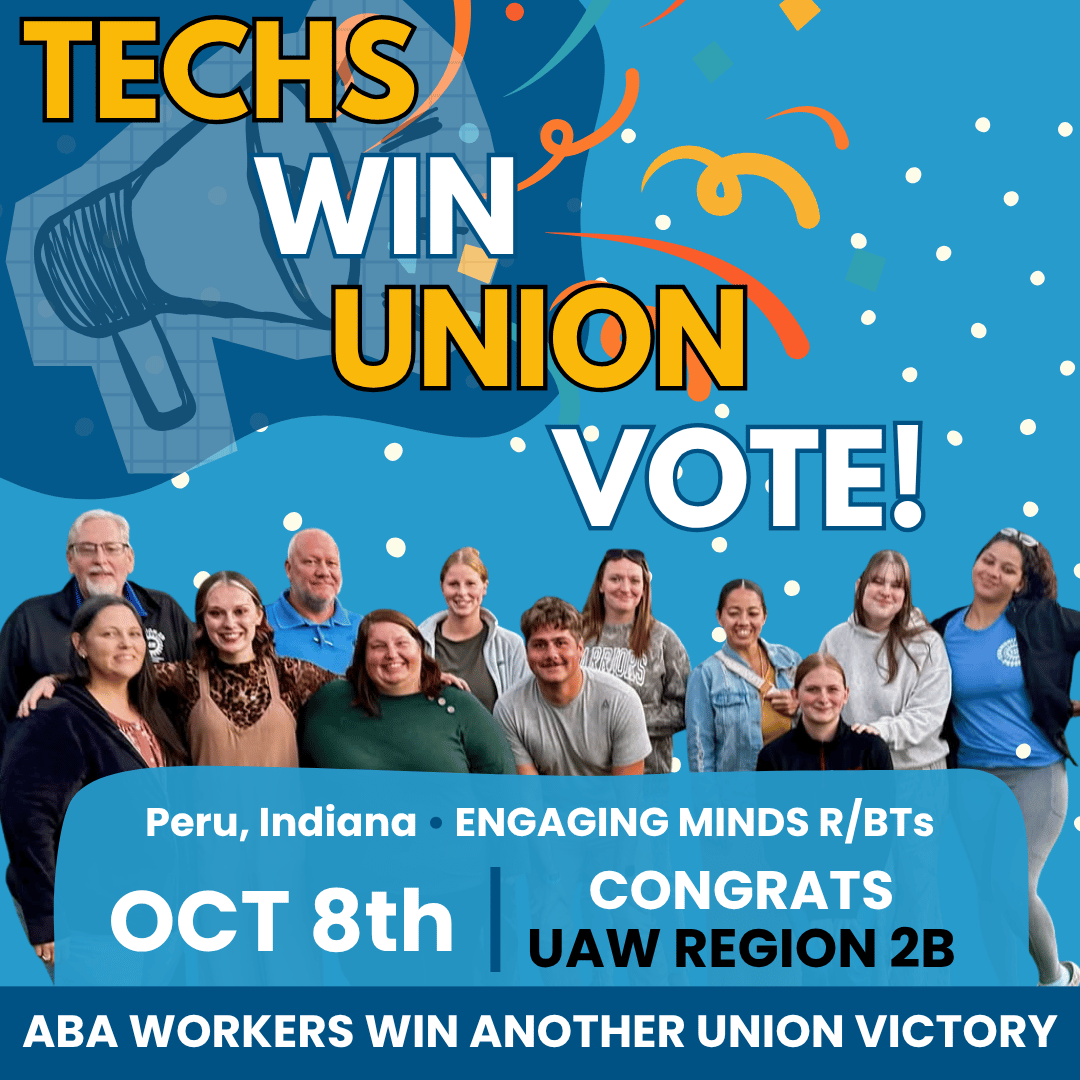
Addressing these challenges requires more than incremental adjustments to training programs or retention initiatives. The problems facing the ABA workforce are fundamentally labor issues involving compensation, safety, workload, and professional voice. Historically, workers in healthcare and human services have improved these conditions through collective action. Unionization provides a mechanism for workers to negotiate wages, establish safety standards, secure benefits, and participate in decision-making processes that directly affect their work. As of 2026, there are 6 clinics with union representation, but no group has yet signed a bargaining agreement with an employer. These victories are important, but the ultimate goal - establishing better conditions and protections for ABA workers - remains elusive.


The future of the ABA field depends on the stability of its workforce. Without meaningful improvements to working conditions, turnover will remain high, children will go neglected, staffing shortages will persist, and the reputation of the field will continue to decline. The research is clear about both the problems and the solutions.


The ABA Workers Union resolves to be a part of the solution. We encourage all workers to strongly consider organizing. At the end of the day, our working conditions are the client's learning conditions, and these kids deserve the best.


Alex Profile Picture

Alex

@ABA.Rocks

Ever wondered how to form a union at work?

UPCOMING MARCH TRAINING: This EWOC (Emergency Worker Organizing Committee, a project of the DSA and UE) training series will help you and your co-workers build your union from the ground up. EWOCS is an amazing organization that provides free training for workers from all industries (including, of course, ABA workers). In this training series, you'll hear from both experienced and new organizers who are organizing their own workplaces. Trainings embrace a popular education model, beginning with practical shared experiences before participants dive into small discussion groups with participants across the globe.


It is strongly encouraged that folks commit to the entire training series, as each module provides step-by-step lessons with practical actions you can take to organize your workplace.


PLEASE NOTE: EWOCS is not affiliated with the ABA Workers Union. EWOCS is a project of the DSA and UE and is an incredible volunteer-led organization that supports aspiring and experienced organizers alike.


Starts April 26th — Registration closes 4/19/2026.


Sign-up link here: https://workerorganizing.org/training/#form 


  1. Developing Leadership

    • Sunday, April 26 • 3:00-4:30 p.m. ET (12:00-1:30 p.m. PT)

    Learn how to use a chart, assess co-workers, and build a team to organize with. The organizing committee is the backbone of any organizing effort, and the chart is the best way to track your campaign.


  2. The Organizing Conversation

    • Sunday, May 3 • 3:00-4:30 p.m. ET (12:00-1:30 p.m. PT)

    Learn how to talk and listen to your co-workers to learn what they care about, as well as how to assess and get them to support the campaign.


  3. The Arc of the Campaign

    • Sunday, May 10 • 3:00-4:30 p.m. ET (12:00-1:30 p.m. PT)

    Learn what steps an organizing committee takes to build their campaign and how to choose demands that are popular.


  4. Inoculation and the Boss Campaign

    • Sunday, May 24 • 3:00-4:30 p.m. ET (12:00-1:30 p.m. PT)

    Learn how to prepare yourself and your co-workers for the boss’s counter-campaign, why inoculation is critical, and how to stick to your positive message, not the boss’s.


Alex Profile Picture

Alex

@ABA.Rocks

In late fall 2025, workers at Aspire Learning Center decided they’d had enough. RBTs at the clinic were facing daily challenges that made quality care harder than it needed to be: outdated materials, pressure to keep sick clients in session, and wages that didn’t come close to reflecting the skill and responsibility the job demands.


Instead of waiting for things to improve on their own, the workers reached out to the ABA Workers’ Union and began organizing together for change. The workers formed an organizing committee, created a workplace map, and contacted the Emergency Worker Organizing Committee to get formal support as their campaign progressed. They used structure tests to practice collectively taking risks, and 


On March 11, 2026, their effort paid off. After more than a month of resistance from management, the workers won their union election decisively. 31 out of 37 RBTs voted yes, choosing collective voice over silence and stability over uncertainty.


Now, Aspire workers are preparing for the next phase: negotiating their first contract. Their priorities are straightforward and long overdue. A living wage. Paid sick time. The tools and support needed to provide safe, effective therapy for the children and families who depend on them.


Organizing is never easy. Employers push back. Doubt creeps in. People get tired. But across the country, more RBTs and BCBAs are proving that change is possible when workers stand together.


The victory at Aspire Learning Center is another sign that the field of ABA is changing and that the people who do the work are no longer settling for less. There are now RBT unions at 6 locations across 4 ABA companies nationwide, with the number growing every month. R/BTs, BCaBAs, and BCBAs should take note of what's possible when workers stand together. What felt impossible a year ago is now a monthly trend: workers in our field are standing their ground and demanding better for each other and their clients.


Alex Profile Picture

Alex

@ABA.Rocks

Announcement: Next General Meeting 02.16.26 @ 8:00 PM EST


Our next general meeting is on Monday, 02.16.26, at 8:00 PM EST. Link here: https://meet.google.com/rar-ruqy-vpe 


On the Agenda:

  • Worker Education
  • Workplace Updates & Troubleshooting
  • Roundtable Discussion


Looking forward to seeing you there!


Alex Profile Picture

Alex

@ABA.Rocks

Announcement: Next General Meeting 02.16 @ 8:00 PM EST.


Our next general meeting is on Monday, 02.02.26, at 8:00 PM EST. Link here: https://meet.google.com/rar-ruqy-vpe 


On the Agenda:

  • Worker Education
  • Workplace Updates & Troubleshooting
  • Roundtable Discussion


Looking forward to seeing you there!


Alex Profile Picture

Alex

@ABA.Rocks

Ever wondered how to form a union at work?

UPCOMING MARCH TRAINING: This EWOC (Emergency Worker Organizing Committee, a project of the DSA and UE) training series will help you and your co-workers build your union from the ground up. EWOCS is an amazing organization that provides free training for workers from all industries (including, of course, ABA workers). In this training series, you'll hear from both experienced and new organizers who are organizing their own workplaces. Trainings embrace a popular education model, beginning with practical shared experiences before participants dive into small discussion groups with participants across the globe.


It is highly encouraged that folks commit to the entire training series, as each module provides a stepwise lesson with practical action you can take to organize your workplace.


PLEASE NOTE: EWOCS is not affiliated with the ABA Workers Union. EWOCS is a project of the DSA and UE and is an incredible volunteer-led organization that supports aspiring and experienced organizers alike.


Starts January 6th. Registration closes 12/30/2026.


Sign-up link here: https://workerorganizing.org/training/#form 

3/4, 3/11, 3/18, 3/25

  1. Developing Leadership

    • Tuesday, March 4 • 8:00-9:30 p.m. ET/5:00-6:30 p.m. PT 

    Learn how to use a chart, assess co-workers, and build a team to organize with. The organizing committee is the backbone of any organizing effort, and the chart is the best way to track your campaign.


  2. The Organizing Conversation

    • Tuesday, March 11 • 8:00-9:30 p.m. ET/5:00-6:30 p.m. PT 

    Learn how to talk and listen to your co-workers to learn what they care about, as well as how to assess and get them to support the campaign.


  3. The Arc of the Campaign

    • Tuesday, March 18 • 8:00-9:30 p.m. ET/5:00-6:30 p.m. PT 

    Learn what steps an organizing committee takes to build their campaign and how to choose demands that are popular.


  4. Inoculation and the Boss Campaign

    • Tuesday, March 25 • 8:00-9:30 p.m. ET/5:00-6:30 p.m. PT 

    Learn how to prepare yourself and your co-workers for the boss’s counter-campaign, why inoculation is critical, and how to stick to your positive message, not the boss’s.


Alex Profile Picture

Alex

@ABA.Rocks

Ever wondered how to form a union at work?

UPCOMING MARCH TRAINING: This EWOC (Emergency Worker Organizing Committee, a project of the DSA and UE) training series will help you and your co-workers build your union from the ground up. EWOCS is an amazing organization that provides free training for workers from all industries (including, of course, ABA workers). In this training series, you'll hear from both experienced and new organizers who are organizing their own workplaces. Trainings embrace a popular education model, beginning with practical shared experiences before participants dive into small discussion groups with participants across the globe.


It is highly encouraged that folks commit to the entire training series, as each module provides a stepwise lesson with practical action you can take to organize your workplace.


PLEASE NOTE: EWOCS is not affiliated with the ABA Workers Union. EWOCS is a project of the DSA and UE and is an incredible volunteer-led organization that supports aspiring and experienced organizers alike.


Starts January 6th. Registration closes 12/30/2026.


Sign-up link here: https://workerorganizing.org/training/#form 

3/4, 3/11, 3/18, 3/25

  1. Developing Leadership

    • Tuesday, March 4 • 8:00-9:30 p.m. ET/5:00-6:30 p.m. PT 

    Learn how to use a chart, assess co-workers, and build a team to organize with. The organizing committee is the backbone of any organizing effort, and the chart is the best way to track your campaign.


  2. The Organizing Conversation

    • Tuesday, March 11 • 8:00-9:30 p.m. ET/5:00-6:30 p.m. PT 

    Learn how to talk and listen to your co-workers to learn what they care about, as well as how to assess and get them to support the campaign.


  3. The Arc of the Campaign

    • Tuesday, March 18 • 8:00-9:30 p.m. ET/5:00-6:30 p.m. PT 

    Learn what steps an organizing committee takes to build their campaign and how to choose demands that are popular.


  4. Inoculation and the Boss Campaign

    • Tuesday, March 25 • 8:00-9:30 p.m. ET/5:00-6:30 p.m. PT 

    Learn how to prepare yourself and your co-workers for the boss’s counter-campaign, why inoculation is critical, and how to stick to your positive message, not the boss’s.


Alex Profile Picture

Alex

@ABA.Rocks

Organizing 4 Power is organizing a single-session workshop to refresh or introduce graduates of previous training on the subject of Structure Tests. In an escalatory campaign, taking risky actions on a unified front is challenging, and the boss will do everything in their power to stop it.


This session will focus on finalizing the worksheet designed to help structure your A Plan to Win. Content will also include introductions to charting/workplace mapping, live workshopping with previous training graduates, and a discussion on how to put these plans into motion effectively.

Additional trainings are coming up, so be sure to RSVP on the Organizing 4 Power website: 

  • March 5th, Community Group Structure Tests: Identifying and Choosing Structures and Targets (for community groups)
  • Power-Up II: A core organizing training on targets, escalation and structure tests on May 5th, 7th, 19th, and 21st as part of this series

More information is available on the Organizing 4 Power website: https://organizing4power.org/ 


Sign up for the February 2nd workshop on Structure Tests here: 

  • Track A — 18:00-20:00 Brussels time (Find your local time here)

  • Track B — 8-10 PM New York time (Find your local time here)


Alex Profile Picture

Alex

@ABA.Rocks

Ever wondered how to form a union at work?

This EWOC (Emergency Worker Organizing Committee, a project of the DSA and UE) training series will help you and your co-workers build your union from the ground up. EWOCS is an amazing organization that provides free training for workers from all industries (including, of course, ABA workers). In this training series, you'll hear from both experienced and new organizers who are organizing their own workplaces. Trainings embrace a popular education model, beginning with practical shared experiences before participants dive into small discussion groups with participants across the globe.


It is highly encouraged that folks commit to the entire training series, as each module provides a stepwise lesson with practical action you can take to organize your workplace.


PLEASE NOTE: EWOCS is not affiliated with the ABA Workers Union. EWOCS is a project of the DSA and UE, and is an incredible volunteer worker-led organization that supports aspiring and experienced organizers alike.


Starts January 6th. Registration closes 12/30/2026.


Sign-up link here: https://workerorganizing.org/training/#form 


  1. Developing Leadership

    • Tuesday, January 6 • 8:00-9:30 p.m. ET/5:00-6:30 p.m. PT 

    Learn how to use a chart, assess co-workers, and build a team to organize with. The organizing committee is the backbone of any organizing effort, and the chart is the best way to track your campaign.


  2. The Organizing Conversation

    • Tuesday, January 13 • 8:00-9:30 p.m. ET/5:00-6:30 p.m. PT 

    Learn how to talk and listen to your co-workers to learn what they care about, as well as how to assess and get them to support the campaign.


  3. The Arc of the Campaign

    • Tuesday, January 20 • 8:00-9:30 p.m. ET/5:00-6:30 p.m. PT 

    Learn what steps an organizing committee takes to build their campaign and how to choose demands that are popular.


  4. Inoculation and the Boss Campaign

    • Tuesday, January 27 • 8:00-9:30 p.m. ET/5:00-6:30 p.m. PT 

    Learn how to prepare yourself and your co-workers for the boss’ counter-campaign, why inoculation is critical, and how to stick to your positive message, not the boss’.


admin Profile Picture

admin

@abaworkersunion

Workers at First Steps Kids organized a union on 12/12/2025, winning the ability to negotiate their working conditions with their employer.


We're closing out 2025 with five unions in the field of ABA - a historic accomplishment for RBTs, BCaBAs, and BCBAs. As a field, let's commit to smashing that record in 2026.


Alex Profile Picture

Alex

@ABA.Rocks

The Shooting of Charles Kinsey

I was a freshly certified BCaBA at FABA for the first time in 2016 when I learned that a behavior technician, named Charles Kinsey, had been shot while protecting a client who had eloped from a group home and had subsequently sat down in the street to play with a toy truck. Officers, searching for an armed, suicidal man, heard Charles Kinsey say,

"All he has is a toy truck. A toy truck. I am a behavior therapist at a group home"

He shot Charles in the leg; his client was physically unhurt. 


At FABA that year, they gave Charles a special award and a standing ovation. I stood and cheered in the crowded Fort Lauderdale hotel lobby while a representative of some kind accepted the prize on Charles's behalf as he was convalescing in the hospital.


Part of me felt proud to be in a profession where people show up with that level of courage. Another part of me wondered why we were celebrating that courage instead of interrogating the system that made it necessary.


Working in an ABA Clinic is Exhausting

Around the same time, our BCBA and founder showed up at our clinic carrying balloons shaped like the number "13." We'd recently opened our 13th clinic. She gladly walked around the clinic, announcing to everyone working the floor that day that we'd been able to expand rapidly, could provide high-quality services to kids in more areas, and develop the dissemination of Applied Behavior Analysis to even more families. 


A lot of us felt a particular kind of way about those balloons - $13 was the company's hard cap for RBTs at the time in terms of hourly wage. If you wanted more, you'd have to go to school, which, for all of us, meant taking out a student loan. Most of us lived paycheck to paycheck, and the idea of taking on any kind of debt was terrifying. Some of us had worked at the company for half a decade or more, and still weren't sure if we could make ABA a career. I got my BCaBA certification with the mindset that it was a small investment, and I could back out if I had to.


There's a reason for this. Life in an ABA center, on the floor, is vastly different from the glossy, corporate presentation you might experience during a clinic tour or on a company's website. There is daily stress and trauma associated with this job, like any job; however, even the iron-willed and experienced can find it challenging. My BCBA at the time broke down, telling me about how she'd witnessed two of her friends die in Iraq due to mortar fire. Something about work that day triggered her; she had a brief moment of real human pain, and then continued. We all try to leave whatever we're carrying at the door before starting therapy; for some, those things are more challenging to put down than others.


The Mask We Wear to Work

During clinic tours, our founder would prep us in advance and discipline behavior techs who did not present a sufficiently charming image to visiting investors, researchers, auditors, or prospective families. I quickly learned to run maintenance targets when unfamiliar faces were in the building and to hype up my client up for the show. Shamefully, I learned to take recess breaks with clients whose behavior I felt was more unpredictable. I was terrified of losing this job. 


There is also the strange slurry of banality and chaos each day in an ABA clinic. Sometimes, this makes the job really exciting - and truthfully, I say this is one of the most rewarding aspects of the profession. There is repetition and consistency, but with any human-facing work, people change, they learn new things, they show up each day in surprising and joy-inspiring ways. However, there are also sudden schedule changes. At first, exciting, but over time, just another grueling aspect of the job. Once you're a veteran (hopefully), companies often won't hesitate to assign you to new clients fairly suddenly. Your hours become unpredictable. You might wake up to an 8:00 - 3:00 shift, only to find out at 2:30 that it's now an 8:00 - 6:00 shift, with no lunch break (just eat at the scheduled group snack with your client). 


Be grateful - that's good hours! We chose you for this because you're a rockstar. You're great at this, and we think you're up for this challenge. Hey, so and so called out - can you cover for them so we can ensure continuity of care and prevent Mom from having to lose hours at work?


It's a double bind: setting boundaries in ABA is often framed as hurting client progress or harming a family. Many companies have learned to use this kind of mixture of faux corporate-kindness, we're-a-family ethos alongside Millennial Management strategies to replace authentic workplace camaraderie with a commodified, virulent strain of codependence that puts the company's mission⁠⁠⁠⁠⁠⁠⁠ first and the people on some tertiary or quaternary rung. But hey, at least the people are on the ladder!


Loyalty is a one-way street at these organizations.


Letting the Mask Slip

This is not an extraordinary situation for direct care professionals in ABA. On my first day in the field, my shadow technician, sporting a black eye from an errant clicker, told me her experience of repeated sexual harassment at her last company. She'd transitioned to the clinic because in-home work was just too dangerous as a woman, and here, with one eye swollen shut, she felt safer. She went on to serve seven more years at the company as head of its private school program.


These experiences are as routine as DTT or NET. They are the unadvertised, suppressed experience of many professionals entering the field, and a tremendous component of RBT burnout that goes underreported. It is understandable, to a degree, how challenging this problem must be to address at the systems level. The nature of the work is dangerous; companies cannot be held accountable for the behavior of salacious parents.


One step companies can take, however, is to stop pretending that the opportunity to make a difference in a child's life somehow excuses them from providing a living wage for RBTs. There are more and more RBTs joining the field every year - but what these numbers don't show (source: BACB, data as of December 2025) is the number of RBTs who quit out of exhaustion, fear, and financial precarity.


The work is dangerous, skilled, exhausting, and essential, yet the people doing it are paid poverty wages and expected to absorb limitless risk with a smile.

And that arrangement only survives because workers have been conditioned to believe that sacrifice is part of the job.


That's the lie, though - implicitly, explicitly, we've been told that advocating for ourselves steals from client care. Recent research has found the opposite. In fact, the term "vocational awe" or "morally-coded" workplace is a well-studied phenomenon that refers to 


Our working conditions are the clients' learning conditions

Studies have repeatedly found that union density leads to better pay, benefits, and access to healthcare. Hospital workers who have unionized report lower rates of post-traumatic stress. Union workers in healthcare have better access to healthcare than unorganized workers (though you'd imagine all healthcare workers should, well, have access to healthcare).


No company is going to come save us - but we, together, have the collective power to change the field. If we can run functional analyses, we can form an organizing committee. If we can talk to parents about a child's rougher session, we can talk to our coworkers about what changes they want to see at work. If we can graph a scatterplot, we can map our workplace and manage a get-out-the-vote campaign.


If we want to see this field survive, we have to make it survivable. We can make that happen, but only if we organize.


Form an Organizing Committee Today

Join us on Discord, to connect with your coworkers, and skill up. Our working conditions might be criminal, but it's not a crime to want more.


Alex Profile Picture

Alex

@ABA.Rocks

Temporary Work


A CEO at an ABA company called his RBTs temporary workers


My first thought? You should be a temporary CEO.


He’s not wrong, though - the system is built that way. We’re trained to think this way. Companies exploit us until we can’t take it anymore, then we jump to another company, it’s just as bad, but hey, at least it’s fresh bad, right? We’re disposable - temporary workers.


Who is hurt the worst? The families we serve. These people are waiting months, years, to get services. Every time an RBT quits, that family loses momentum - and that child has a sudden goodbye with someone they learned to trust. It’s a revolving door of trauma, and it has to stop.


ABA companies can get away with this because the system is designed to prop them up: they get a fresh crop of new workers graduating every year, all of them in debt up to their eyeballs, and eager to pay rent and put something on their resume. These companies can then underpay, overwork, and generally exploit them until they give up.


… Unless you start thinking like a behavior analyst. In ABA, we’re supposed to adjust the environment rather than blame the organism. In the workplace, the schedule of reinforcement includes wages, staffing ratios, schedules, benefits, respect, and predictability. It’s a complex schedule of reinforcement, and that environment needs adjusting.


Burnout and job hopping are the predictable outcomes of exploitative systems where workers are making individual decisions. When we work together, collective action becomes the motivating operation for change. A union turns individual pain into shared motivation for change - your coworkers' issues alter the value of action for you. The aversive conditions (low pay, chaos, retaliation) get stronger, and the reinforcers for collective action get richer.


The state of the field right now is deplorable. When will we, as a field, get the spine we need to demand better for our clients, for ourselves?


The contingencies maintaining this can be analyzed. The setting events for burnout can be understood. We can intervene at the group level, and generalize this change to the home, to clinics, to school districts - even the major PE-backed agencies.


Radical behaviorism doesn’t stop at our clients; if we want thoroughgoing change, we need a union. 


No idea where to start? No worries. The Emergency Worker Organizing Committee (EWOC) can get you in touch with an organizer, for free. Check them out at workerorganizing.org. Join our community over at ABAWorkersUnion.org. Share this video. Let’s stop talking about the need for change - and start the conversation to make it happen.


Alex Profile Picture

Alex

@ABA.Rocks


Alex Profile Picture

Alex

@ABA.Rocks

Another month, another union victory in ABA!

This historic victory is both the second union in Applied Behavior Analysis (ABA) this year and the FIRST private sector union to include both BCBAs, BCaBAs, and RBTs.

Despite a grueling union-busting campaign, the workers held strong. Anti-union propaganda was shared on a daily basis, with lies, coercion, intimidation, and fear-mongering dominating our days for 2 months.

All good BCBAs know that those tactics don't cause lasting behavior change. You know what does? Solidarity.

We're changing this field, one worker at a time. People over profits!

Solidarity Forever! ✊


Alex Profile Picture

Alex

@ABA.Rocks

We'll be launching a weekly study hall for anyone interested in an informal review of the RBT or BCBA task list. This is in conjunction with our sister-site, www.aba.rocks, which aims to break down barriers to accessing information in the field for anyone in the field.

If you're interested in coming, the meeting link will always be: https://meet.google.com/mke-hiqm-rxz 

Anyone interested in sharing their time and experience is welcome, as is anyone who'd like to ask a question or dive into a topic. Bring coffee and patience - we'll practice finding sources for each question and creating a summary document to describe what we talked about and why we came to a given conclusion.


Alex Profile Picture

Alex

@ABA.Rocks

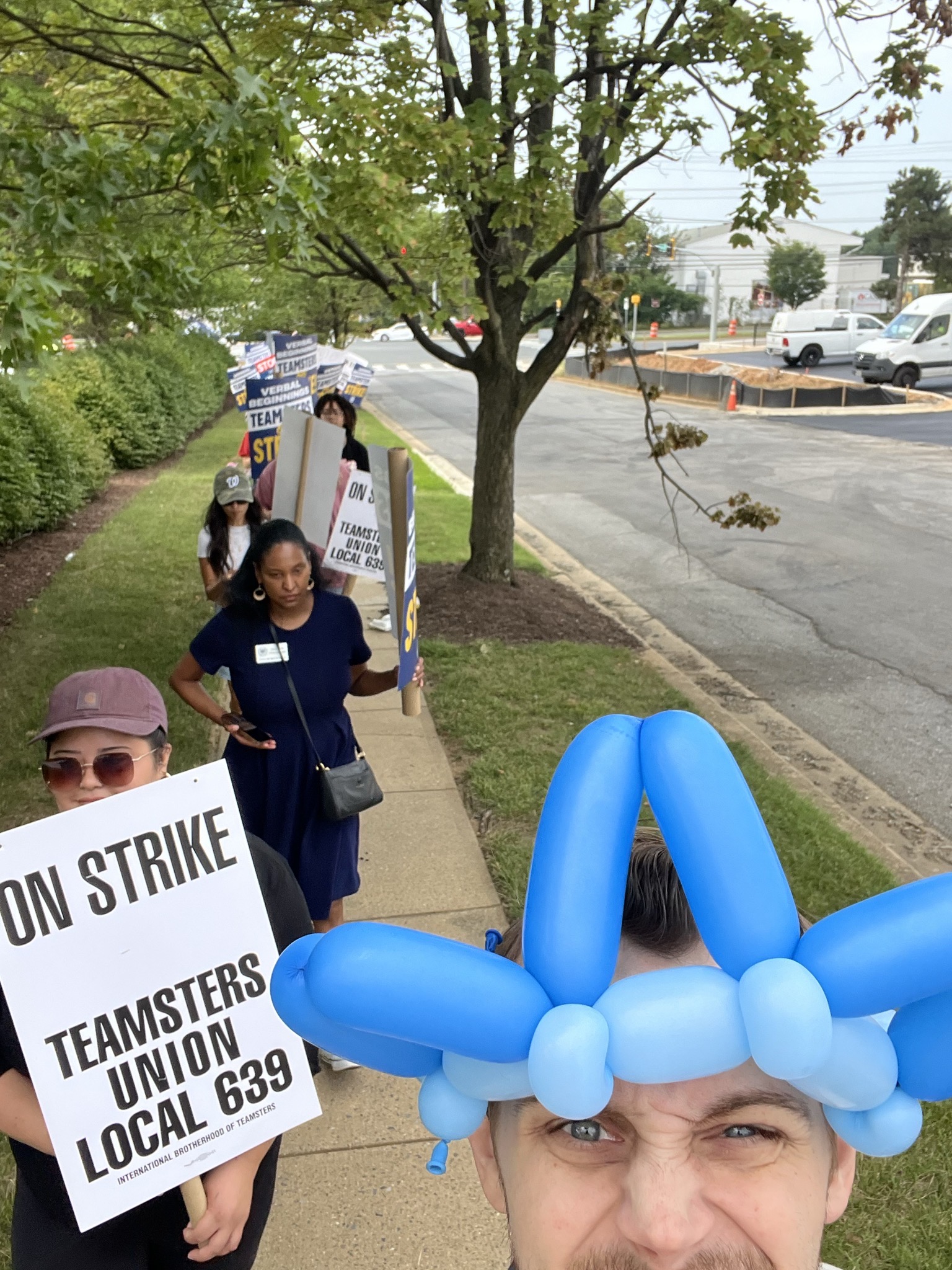
ABA Workers at the Verbal Beginnings center in Rockville, Maryland, won their union vote 33 for and 1 against. 


Workers in this field have proven what was previously only possible. In addition to this historic vote, another group in Richmond, Virginia, is rapidly approaching their union vote within the month. 


When we organize, we win - and by standing not just with ABA workers, but united with the working class as a whole, we can affect change outside of our industry and internationally. 


ABA Workers stand in solidarity with the undocumented workers fighting for their right to exist in the United States, with every worker internationally whose wages suffer while their bosses prosper, and with our allies within the field struggling to survive the hellscape that is the profit-driven healthcare and mental healthcare system.


Congratulations to the workers of Verbal Beginnings in Rockville, Maryland - leading the way in our fight for dignity, respect, and a voice at work!


Alex Profile Picture

Alex

@ABA.Rocks

Announcement: Next General Meeting 03.30 @ 12:30 PM EST.


Our third general meeting is on Saturday, 03.30.25, at 12:30 PM EST. If you'd like to be sent a link, join the Signal Chat to stay connected, or hit the "join" button on the top right to keep in touch via email.


Here's our agenda for today's meeting - reviewing last week's content + continuing organizing:

  • Worker Education: Union 101
  • Workplace Mapping
  • Importance of 1-on-1 Conversation
  • Example Petition
  • Research Study Q&A on RBT Experiences
  • Roundtable discussion


Looking forward to seeing you there!


Alex Profile Picture

Alex

@ABA.Rocks

Announcement: Next General Meeting 03.30 @ 12:30 PM EST.


Our third general meeting is on Saturday, 03.30.25, at 12:30 PM EST. If you'd like to be sent a link, join the Signal Chat to stay connected, or hit the "join" button on the top right to keep in touch via email.


Here's our agenda for today's meeting - reviewing last week's content + continuing organizing:

  • Worker Education: Union 101
  • Workplace Mapping
  • Importance of 1-on-1 Conversation
  • Example Petition
  • Research Study Q&A on RBT Experiences
  • Roundtable discussion


Looking forward to seeing you there!


Alex Profile Picture

Alex

@ABA.Rocks

Announcement: Next General Meeting 03.08 @ 12:30 PM EST.


Our third general meeting is on Saturday, 03.08.25, at 12:30 PM EST. If you'd like to be sent a link, join the Signal Chat to stay connected, or hit the "join" button on the top right to keep in touch via email.


Here's our agenda for today's meeting - reviewing last week's content + continuing organizing:

  • Worker Education: Union 101
  • Workplace Mapping
  • Importance of 1-on-1 Conversation
  • Example Petition
  • Research Study Q&A on RBT Experiences
  • Roundtable discussion


Looking forward to seeing you there!


Alex Profile Picture

Alex

@ABA.Rocks

Announcement: Next General Meeting 03.08 @ 4:00 PM EST.


Our third general meeting is on Saturday, 03.08.25, at 4:00 PM EST. If you'd like to be sent a link, join the Signal Chat to stay connected, or hit the "join" button on the top right to keep in touch via email.


Here's our agenda for today's meeting - reviewing last week's content + continuing organizing:

  • Organizing Updates & Troubleshooting
  • Union Basics: what's a union, how does one form one, and how do they work?
  • Roundtable Discussion + Q&A
  • Presentation slides for today: 03.08.25 Slides


Looking forward to seeing you there!


Alex Profile Picture

Alex

@ABA.Rocks

We had our first educational session on Union Organizing 101. Folks came with action in mind - we discussed the basics of organizing and addressed the following content areas:

👉 The slides can be accessed here.

  • What is a union?
  • How to organize a union?
  • What can a Union Win with guest presenters with the AFSCME and SEIU
  • BST! We're behavior analysts, so of course we practiced having organizing conversations in role-play format

We concluded by creating organization-specific signal groups and action steps for organizing at ABA companies, large and small! Join our national organizing Signal group for more information and to stay connected.


Alex Profile Picture

Alex

@ABA.Rocks

Announcement: Next General Meeting 03.01 @ 4:00 PM EST.


Our second general meeting is on Saturday, 03.01.25, at 4:00 PM EST. If you'd like to be sent a link, join the Signal Chat to stay connected, or hit the "join" button on the top right to keep in touch via email.


Our Agenda was created at the last general meeting:

  • Organizing Updates & Troubleshooting
  • Union Basics: what's a union, how does one form one, and how do they work?
  • Roundtable Discussion + Q&A


Looking forward to seeing you there!


Alex Profile Picture

Alex

@ABA.Rocks

The ABA Worker's Union held its first general meeting today.


We aim to establish a union for all workers in Applied Behavior Analysis. Workers from Florida, Oregon, California, Oregon, and New Jersey met to discuss the current state of the field, discuss past and current unionization efforts in the field, and make a plan for future meetings and workgroups.


In future meetings, we'll discuss creating a technician/paraprofessional/RBT workgroup, a BCaBA workgroup, a BCBA workgroup, and a coordinating committee to unify the effort across all three certification tiers in ABA. We are coordinating a social media push across platforms to reach out to more workers and continue to gather and answer questions about unionization efforts in this field.


We need your help. As we continue to grow, each worker that enters the fold increases our ability to connect with more workers and build a network of resilient organizers dedicated to changing the playing field for all workers in Applied Behavior Analysis.


Your voice matters. Your vote matters. Your union, for all ABA workers!


Alex Profile Picture

Alex

@ABA.Rocks

Reminder: General Meeting 02.02 @ 2:30 PM EST.


Hey! Our first general meeting is tomorrow (02.02.25) at 2:30 PM. If you'd like to be sent a link, join the Signal Chat to stay connected or hit the "join" button on the top right to stay in touch via email.


Alex Profile Picture

Alex

@ABA.Rocks

Unions have fought for real gains for workers.

They won us the 8-hour workday and the weekend and kept children in schools and out of the mines and the fields.

Modern unions fight to protect members from deportation, advocate for teachers who recognize their student's gender expression, and protect nurses from pathogens by giving them adequate staffing ratios and PPE in hospitals.

Our collective power as workers can protect us from the worst of capitalism and give us the power to fight against authoritarianism.

We can strike in solidarity with teachers, nurses, and therapists to demand change.

We can bargain with employers to ensure our voices are heard and our needs are met.

The future of ABA is on the line. If we want to continue to change the world with behavior analysis, we need to change the world for behavior analysts.